
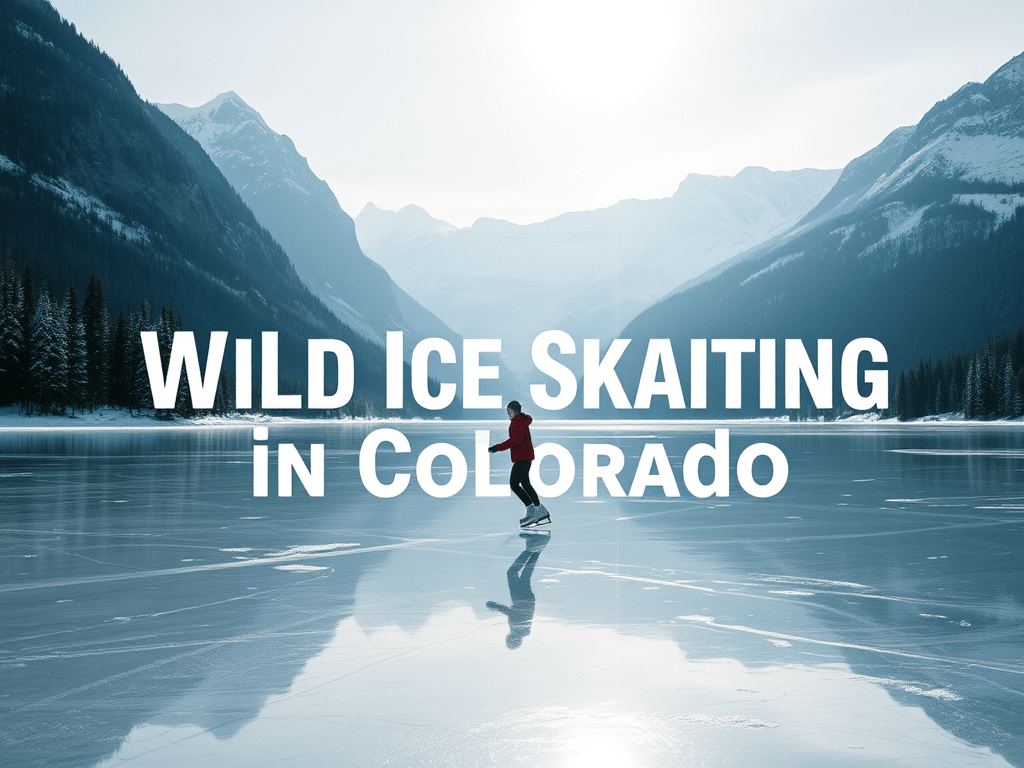
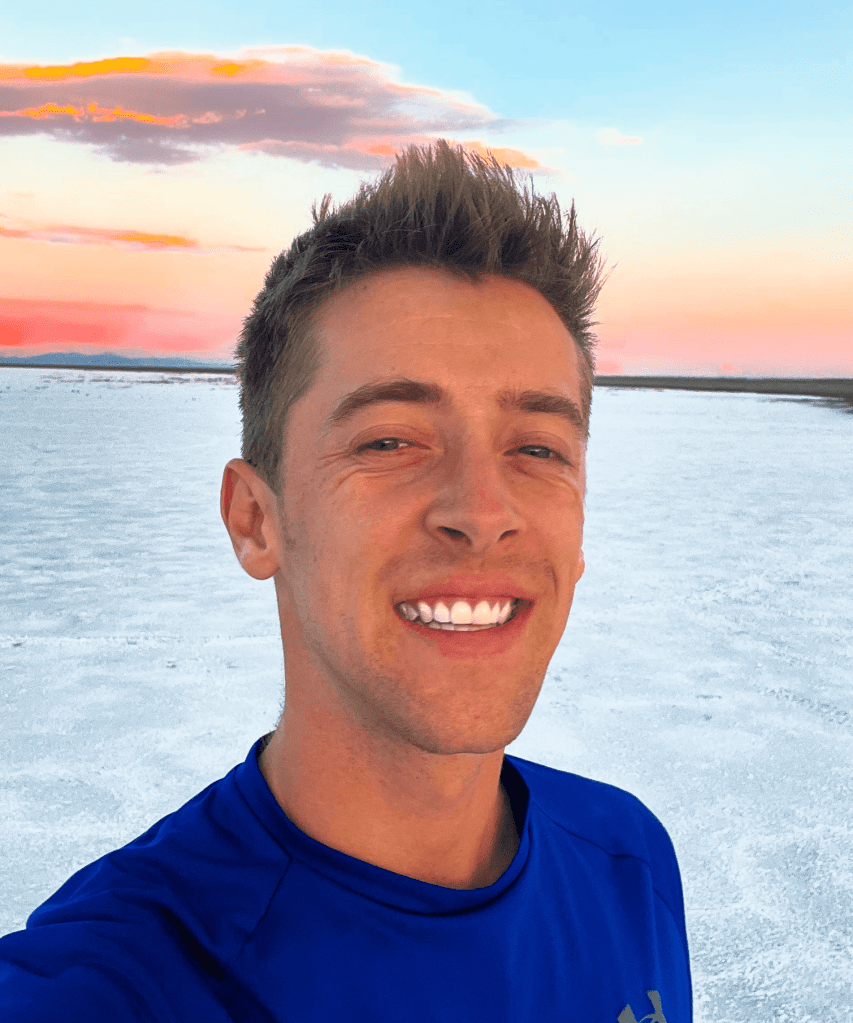
If you’ve found this page, chances are you’ve seen one of my viral videos of wild ice skating on Colorado’s frozen lakes or you’re simply an adventurous soul ready to try one of the most magical winter experiences on the planet.
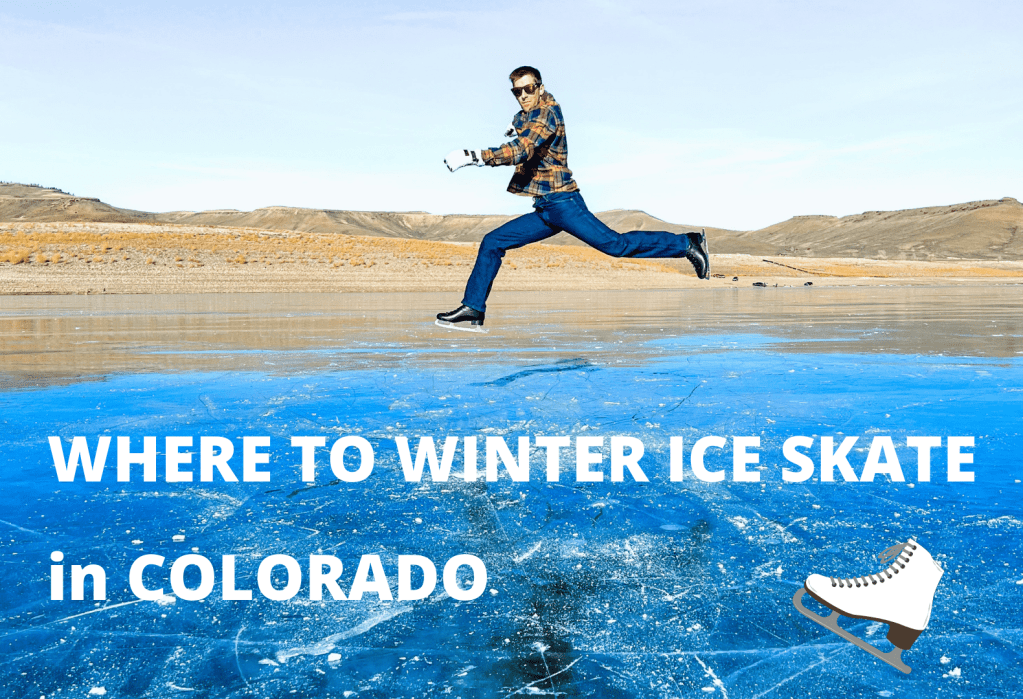
Wild ice skating, a form of backcountry ice skating on natural ice is unlike anything you’ll ever do in a rink. The glassy black ice, the mountains reflecting on the surface, and the sheer freedom of skating across untouched nature feel unreal.
But the sport is also extremely fickle, weather-dependent, and risky if you don’t know what you’re doing. Consider this your complete guide on where to find skateable natural ice in Colorado, how to stay safe, and which lakes offer the best conditions.
❄️ When Does Wild Ice Skating Season Start in Colorado?
The natural ice season in Colorado is short and unpredictable. Conditions and timing vary greatly, but generally:
- Season begins: Early to mid November
- Peak season: Late November through mid December
- Season ends: Once consistent snowfall covers the ice, usually around late December. However later season can bring thick ice to big bodies of water.
Why the short window?
Once snow accumulates on the surface, it insulates the lake preventing it from forming thick, clear ice for the rest of winter. The secret to finding perfect wild ice is catching the lakes right after freeze up and before major storms, sometimes with conditions only existing for a single day!
Ideal freeze conditions for Colorado lakes
Look for:
- Several consecutive days of sub freezing temperatures
- Windy conditions which clears or prevents snow from sticking
- Early season cold fronts before major snowfall happens in the region
- High altitude lakes often freeze earlier than low elevation reservoirs
There’s nothing worse than hiking miles to a lake only to find slush, cracks, or snow cover so your timing is everything.
Pro Tip: Use satellite images to determine the most up-to-date conditions of lakes you are planning to explore.
⚠️ Wild Ice Skating Safety Guide
Wild ice skating is an incredible adventure but it becomes dangerous fast if you’re unprepared. These are the essential safety steps every skater should follow. Refer to my expert safety guide for additional information.
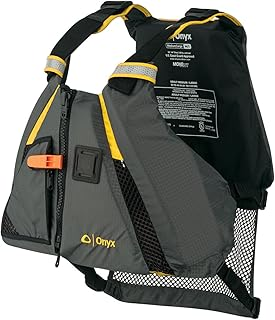
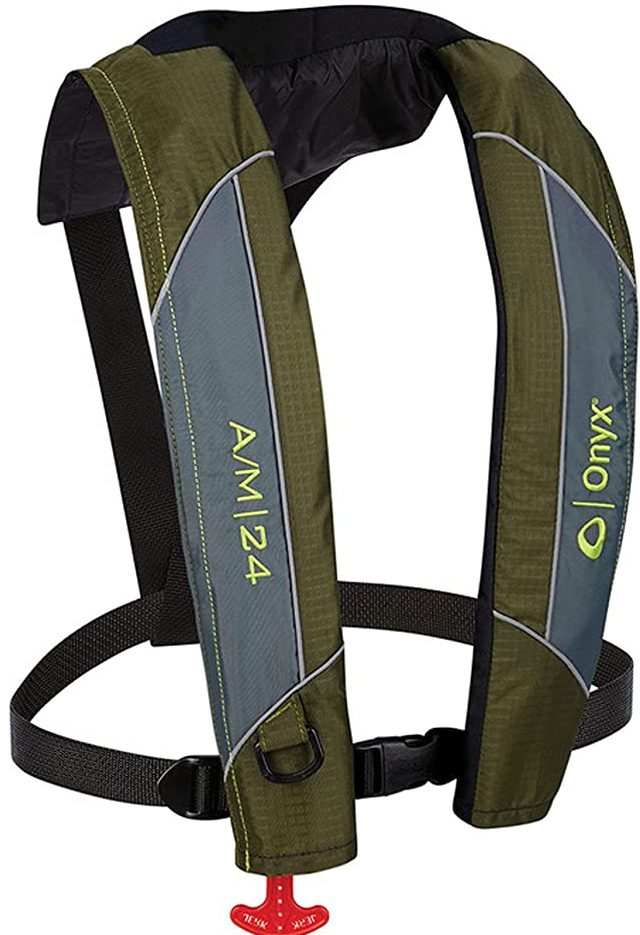
1. Wear a Life Vest
A life vest is to wild skating what a helmet is to skiing. It keeps your head above water long enough to self rescue and reduces panic if you fall through. I have also found it helps pad your upper body when you fall on the ice.
2. Always Test the Ice
Never trust “someone said it was solid yesterday.” Ice changes constantly.
Throw a Rock
Toss a softball size rock high into the air and observe:
- Bounce or small dent = likely thick enough
- Cracks, holes, or breakthrough = stay off
- A healthy lake often produces a distinct twang or musical note when impacted
Drill a Test Hole
The most accurate method using an ice screw or hand auger to drill a small hole and measure thickness.
- Minimum safe skating thickness: 4 inches
- 6+ inches is ideal for groups
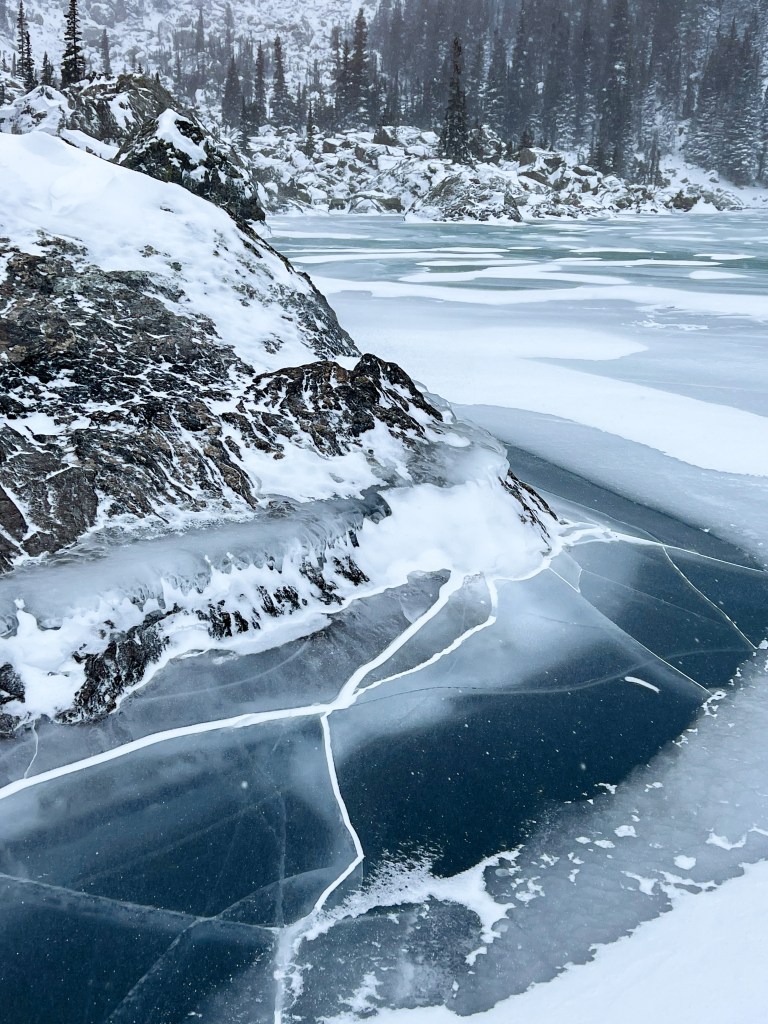
3. Learn How to Read Ice Conditions
Different colors and textures reveal a lot:
- Black/Clear Ice: The holy grail which is strong, smooth, and perfect for skating
- White Ice: Formed from refrozen meltwater; often skateable but check carefully
- Surface melt & refreeze zones: Usually near shorelines; step over these rifts
- Flow zones or inlet/outlet areas: Avoid the ice here it is always thinner
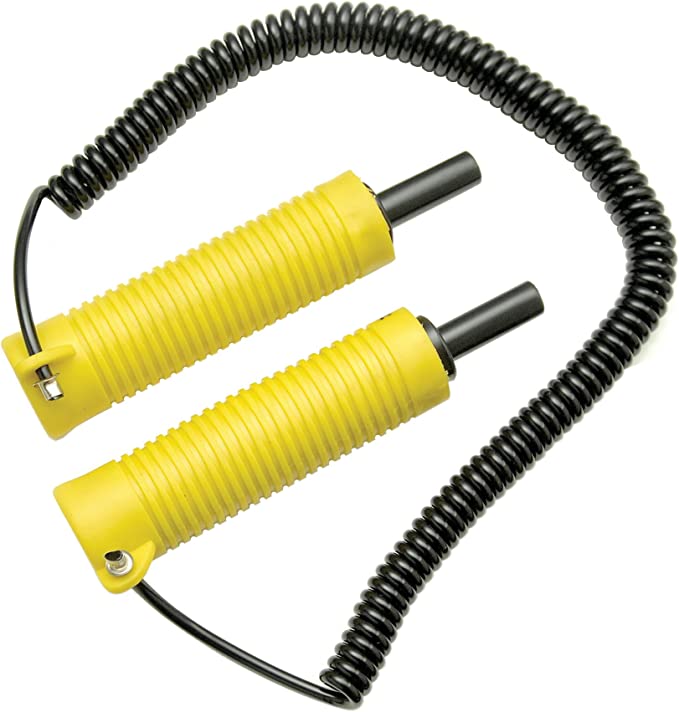
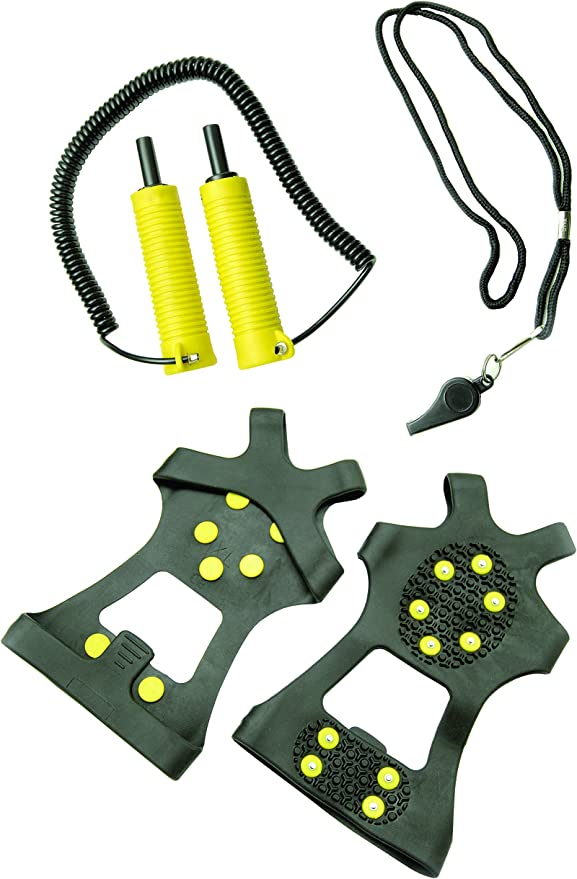
4. Bring Ice Picks & Extra Clothing
Your last-resort rescue tools if you fall in:
- Your life vest keeps you afloat
- Use your ice picks to stab and pull yourself onto solid surface
- Crawl or penguin slide until you’re on stable ice
Always bring a full set of warm backup clothes as hypothermia can set in fast hiking back to the car.
5. Don’t Skate Alone
Classic backcountry rule. If something goes wrong, you want someone capable of calling for help or assisting in a rescue. That said wild ice communities often form organically at popular lakes, and you’ll usually find other skaters out there early in the season.
🏔️ Best Lakes for Wild Ice Skating in Colorado
Below are the top, most consistent, and most stunning places to find natural ice based on years of exploring Colorado’s frozen backcountry. There are countless lakes across the Rocky Mountains to explore and many of the best places I have skated have involved hiking upwards of 10 miles to get there. If you are a beginner at this sport start with lakes closer to civilization and reach out to other skaters you see on social media to see if they will even take you with them!
1. Georgetown Lake
Drive from Denver: 1 hour
Accessibility: Very easy
Best for: Quick trips, beginners, early-season scouting
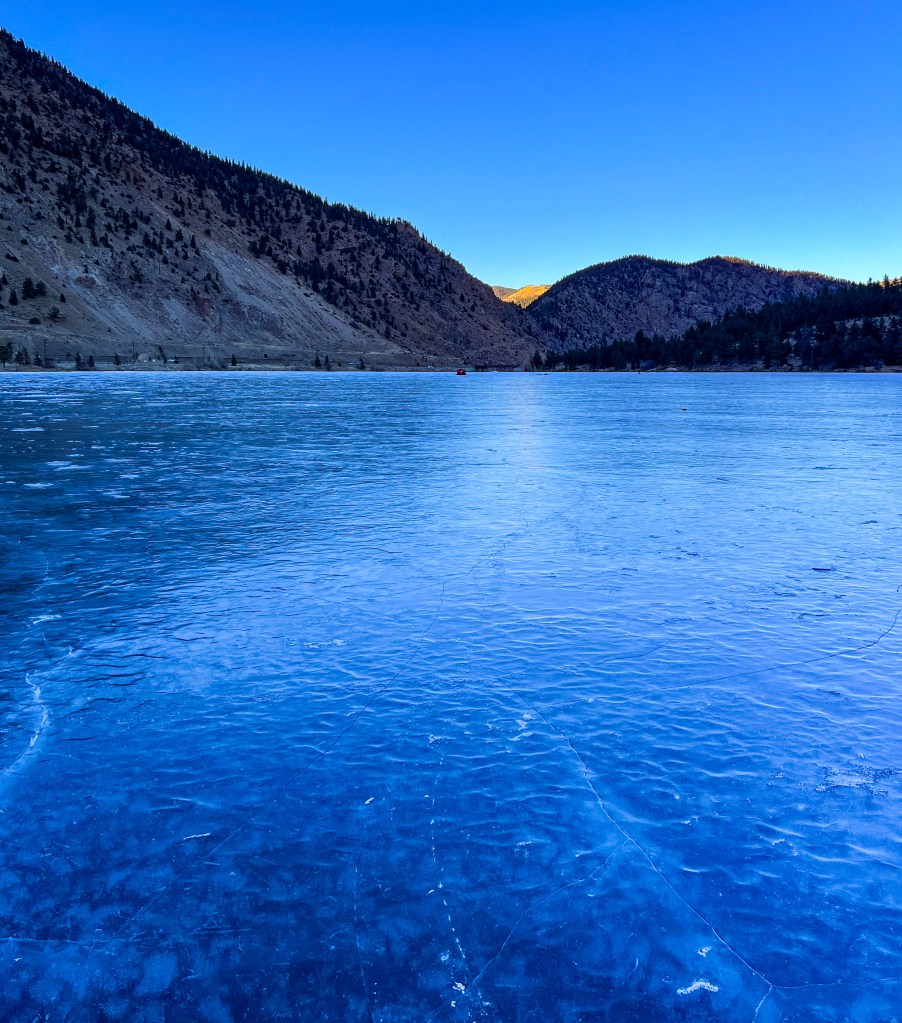
Georgetown often freezes earlier than most Colorado lakes and stays frozen due to high altitude and cold temps. Ice fishermen are common here and useful indicators of ice thickness.
Expect:
- Bumpy, irregular ice
- Snow pockets
- Plenty of foot traffic
- Easy rock testing spots along shore
Great for a quick skate but not the most scenic or smooth compared to more remote lakes.
2. Blue Mesa Reservoir
Drive from Denver: 4 hour
Accessibility: Very easy
Why it’s special: One of the longest natural ice window corridors in Colorado if it freezes
Blue Mesa is a wild ice paradise thanks to:
- Cold temps
- Consistent wind
- Low precipitation
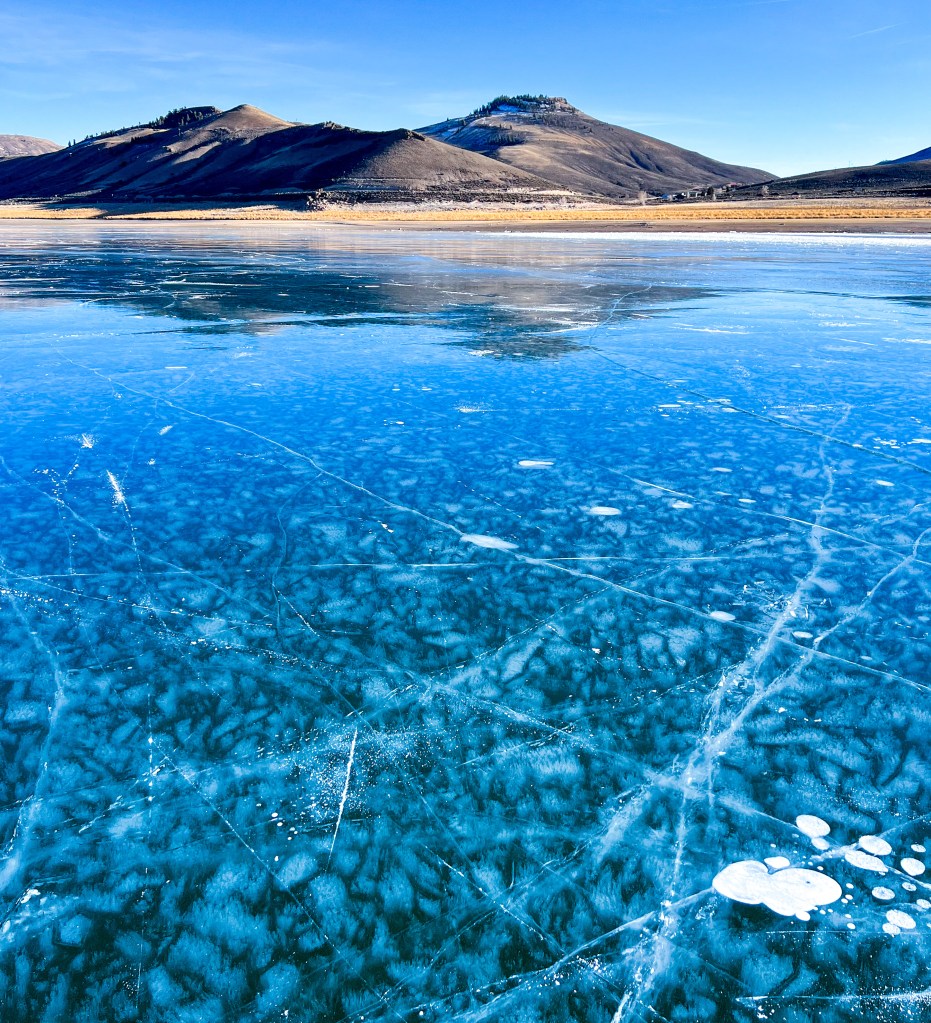
This creates miles of smooth, clear ice that is some of the best in the state. However do not expect to skate this location until much later in the season typically after Christmas unless there are many consecutive cold weeks.
Tips:
- Eastern sections typically freeze first
- Be cautious during sunny afternoons when the nearshore ice often submerges under meltwater
- Expect skaters, hockey groups, families, and ice fishermen
You can skate over a mile in a straight line here on a good day.
3. Antero Reservoir
Drive from Denver: 2.3 to 3 hour
Accessibility: Very easy
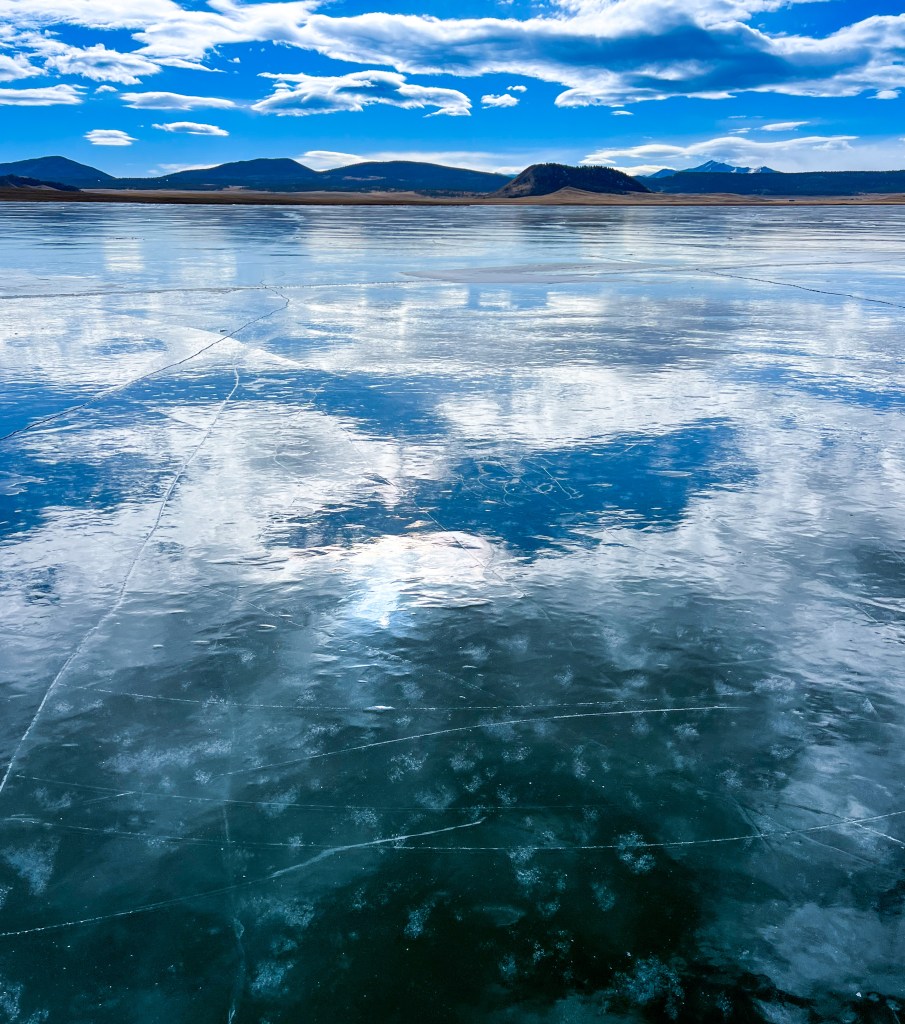
Why go: Incredible clarity and wind polished ice.
A great alternative to the long trip to Gunnison. This reservoir is used predominantly for ice fishing during the winter, but is a great place for skaters to find their own little corner. Another spot to check out close by is 11 mile reservoir, which will likely be frozen at the same time or before Antero.
Expect:
- Some of the clearest ice in Colorado
- Occasional fish visible beneath your feet
- Remote, quiet skating
- Ice-fishing holes you need to watch for these!
Best access is on the south end of the lake near the campgrounds. Test ice in the nearshore zones often has cracks, fissures, and melt patches early in the season. You may need to find a route through this area to get to thicker ice.
Pro Tip: Check ice fishing Facebook groups for updated conditions.
4. Bear Lake and others in Rocky Mountain National Park
Entrance Fee: $30
Hiking Required: 0.8 to 4 miles roundtrip
Start at Bear Lake which often isn’t fully frozen until later in the season. If it is not continue up the trail looking at the other lakes. How far you go depends on your skill level with hiking in the snow and the conditions at the time. Some of the lakes in the area have had the best ice I have ever skated on if you get your timing right. You will likely see other people skating on lakes closer to the parking lot, and less people the further you venture.
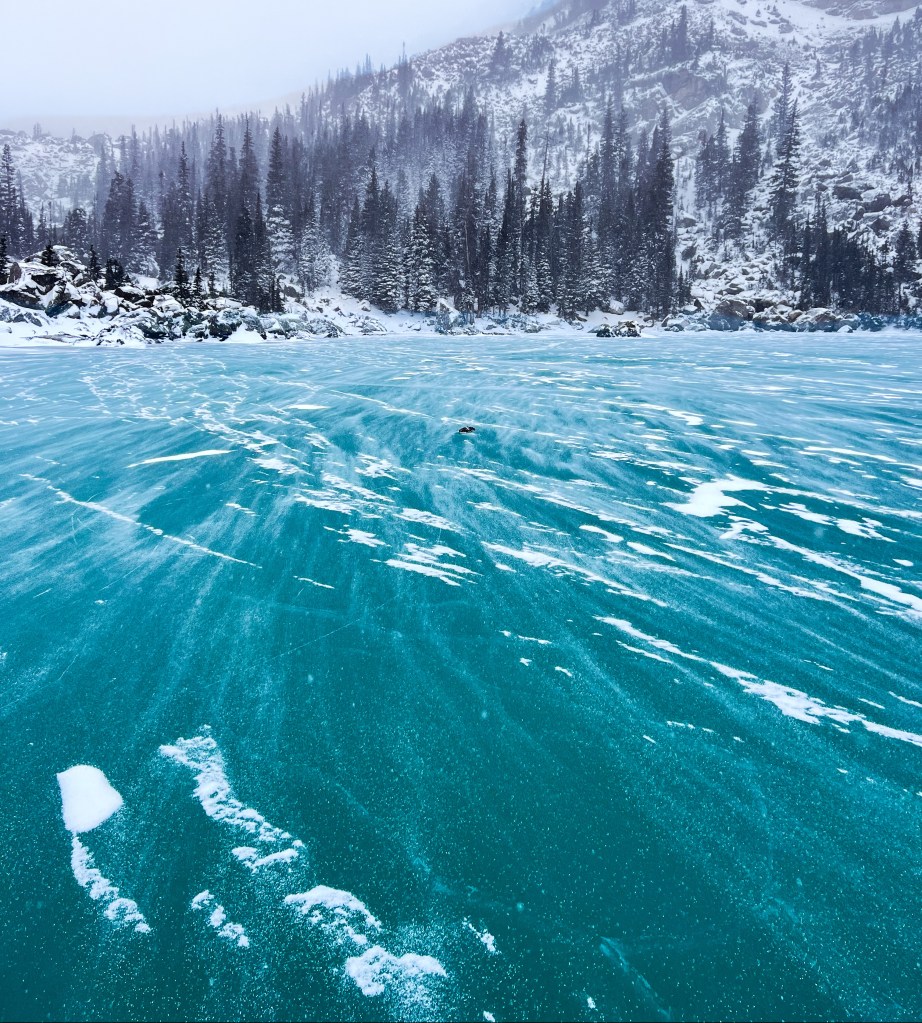
- Turquoise blue water
- Smooth seasonal ice
- Mountain scenery that feels unreal
Try to visit before Thanksgiving because after that, snow usually buries the surface.
5. Lake San Cristobal
Drive from Denver: 5 hours
My #1 favorite when it is frozen.
Located south of Gunnison, this remote natural lake is absolutely stunning when frozen. It is a long drive but worth it if you can catch it while it is solid. The ice here is typically completely smooth and perfect black or clear ice.
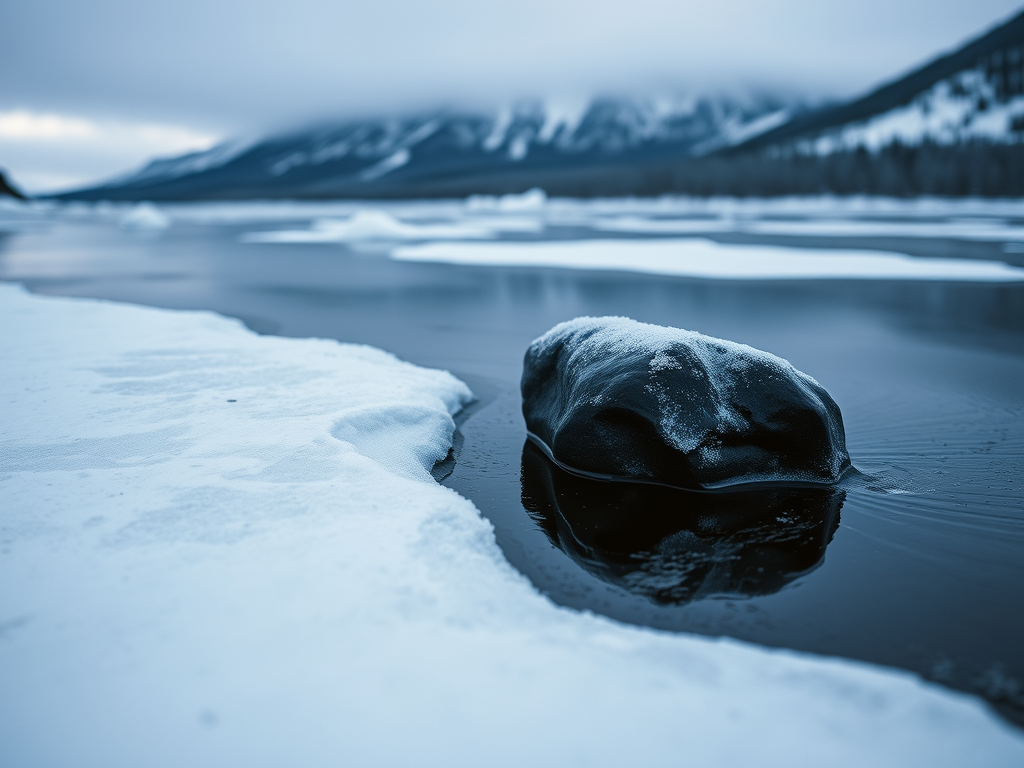
Why it’s worth the drive:
- Vivid dark water
- Some of the best quality ice in Colorado
- Often wind cleared and glassy by Christmas
- Enormous, serene, and crowd free
Most seasons, it doesn’t freeze solid until mid to late December, though smaller sections sometimes are skateable around Thanksgiving.
⛸️ Essential Wild Ice Skating Gear
You don’t need a ton of gear to get started, just the right essentials.
Bare minimum gear:
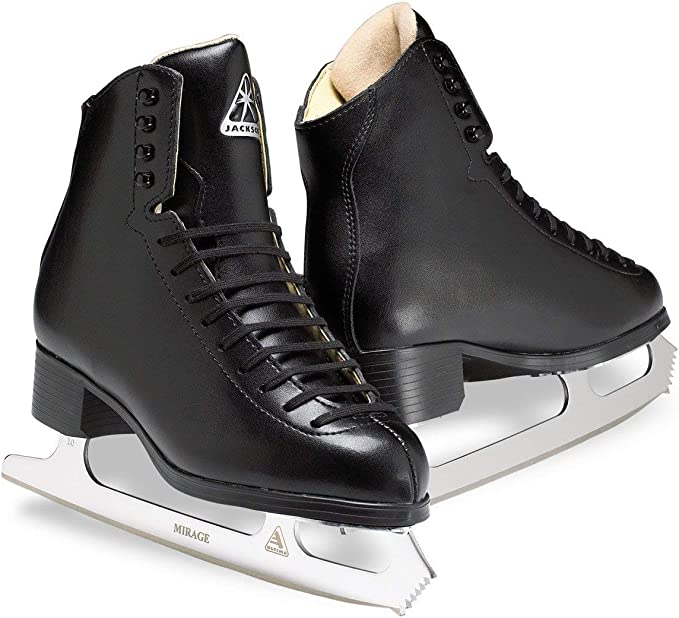
- Ice skates (hockey or figure skates)
- Life vest
- Ice picks
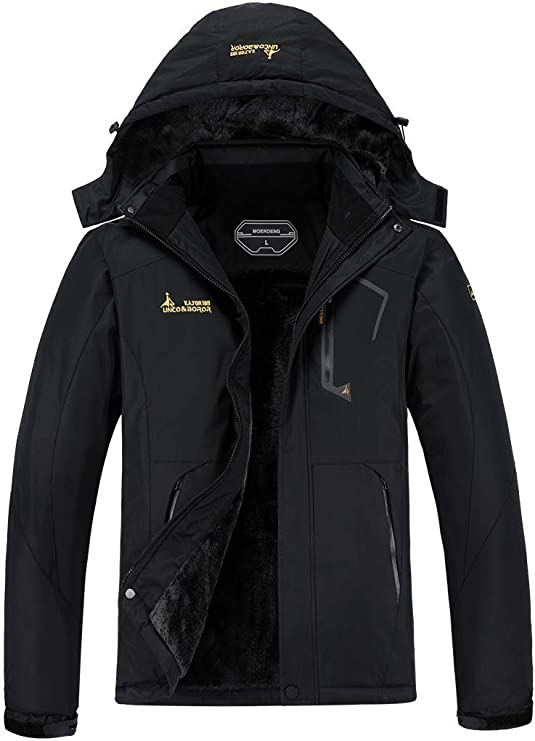
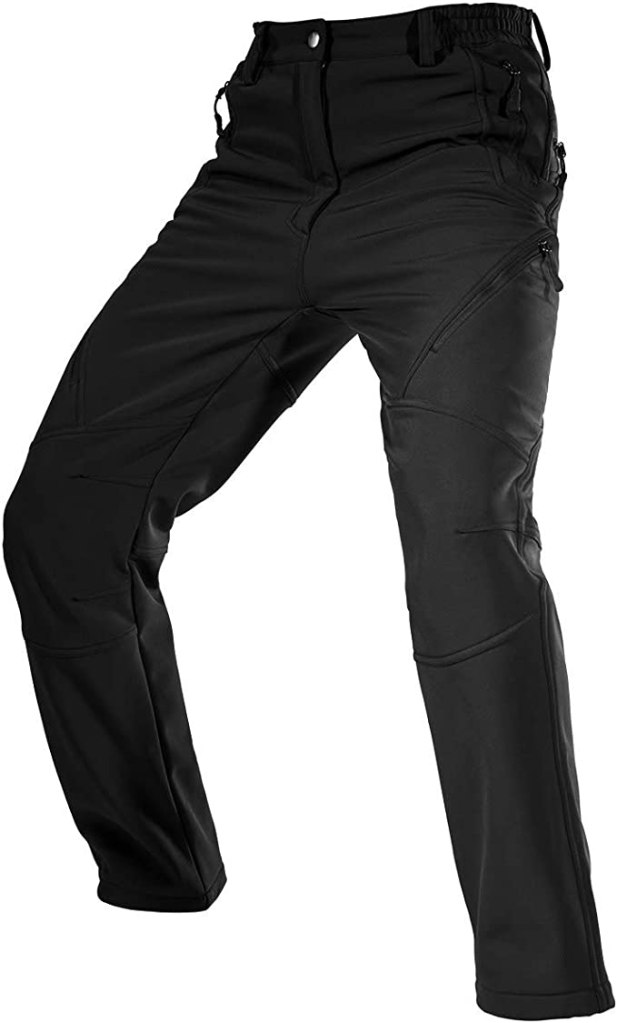
- Layered winter clothing
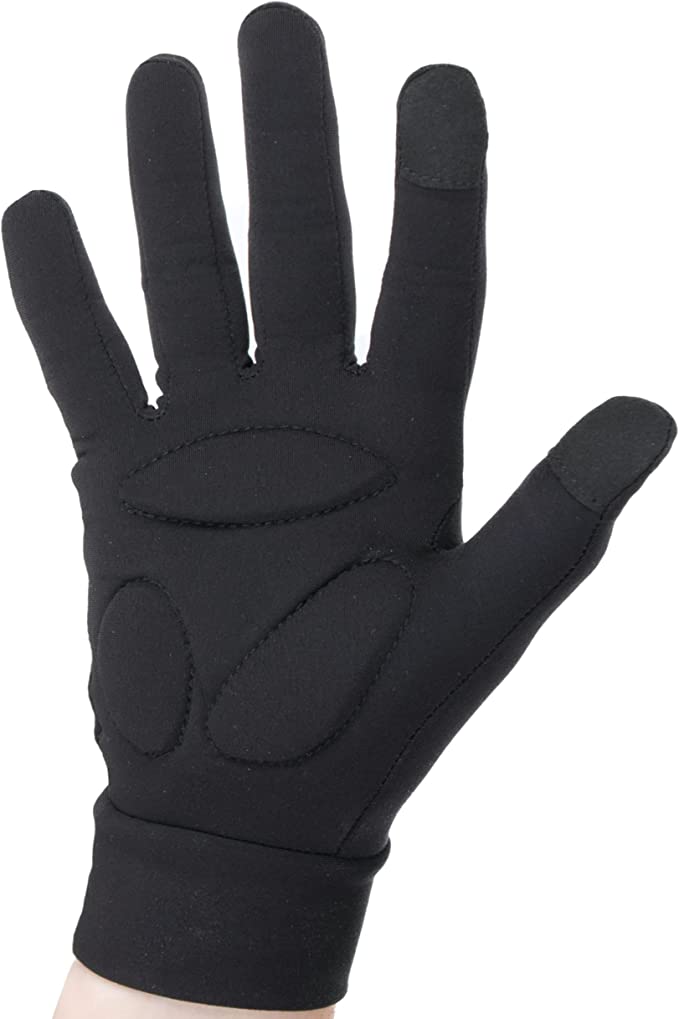
- Waterproof gloves
- Backpack with extra clothes
Optional but recommended:
- Ice screw/hand auger
- Rock for testing ice
- Microspikes for hiking in
- Emergency foil blanket
I keep an updated list of my recommended gear on my storefront.
Final Tips for Wild Ice Skating in Colorado
Ready to experience the thrill of wild ice skating in Colorado? Whether you are exploring frozen lakes, testing natural ice, or discovering the best backcountry skating spots, this guide has everything you need. Grab your gear, stay safe, and make the most of Colorado winter adventures on the most stunning ice in the state.
- Go early in the morning for the firmest ice
- Check the forecast for upcoming snow or wind events
- Start with easy access lakes before heading deep into the backcountry
- Never assume ice is uniformly thick
- The best wild ice days are rare and when conditions line up, go immediately
Wild Ice Skating Essential Gear
Here is a list of some of the gear that I use to stay safe and have fun while wild ice skating in Colorado every year. You can check out a full list of what I use on my storefront. Really all you need is the life vest, ice picks, ice skates, and winter gear to have a successful adventure.
NRS Chinook Fishing Kayak Life Jacket – $100-$160
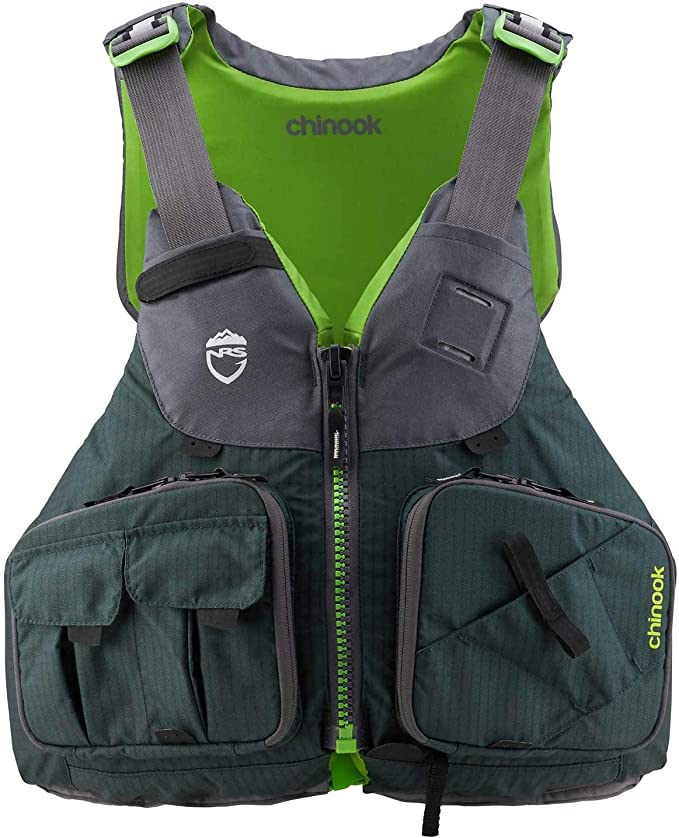
- Full coverage and light
- Pockets for Ice Picks, phone, etc.
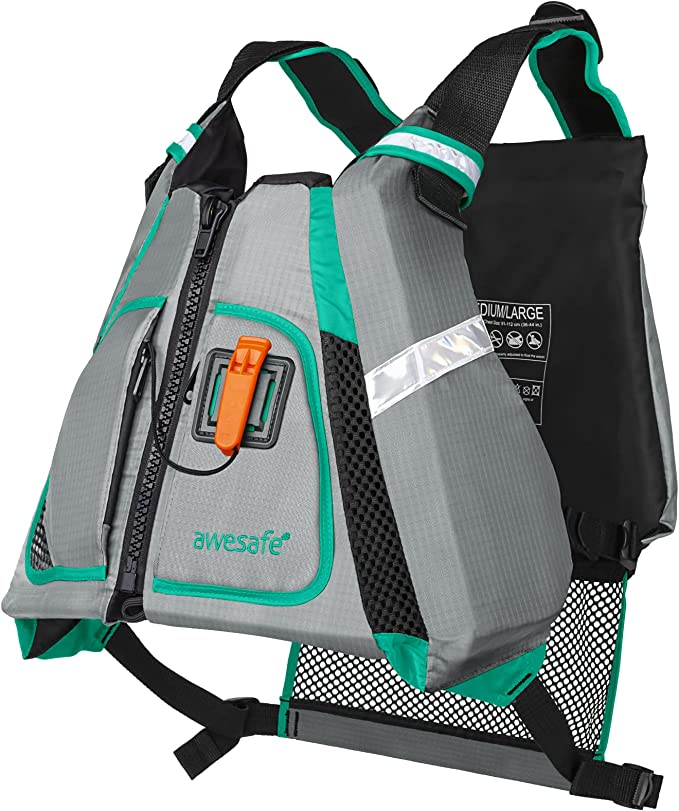
Frabill Deluxe Retractable Ice Picks – $10-$12
Frabill Ice Safety Kit – $12-$13
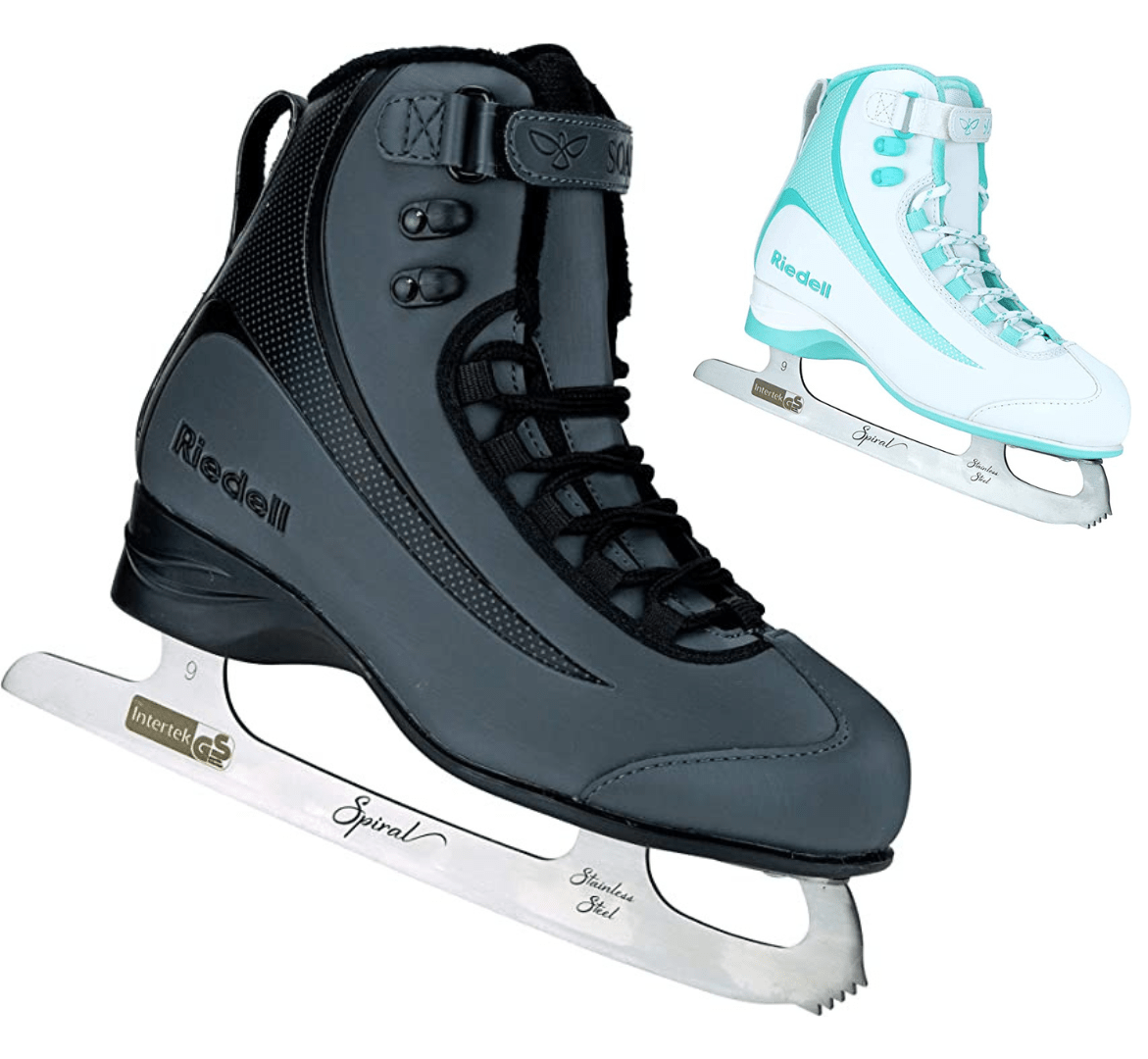
Riedell Hockey Skates – $99

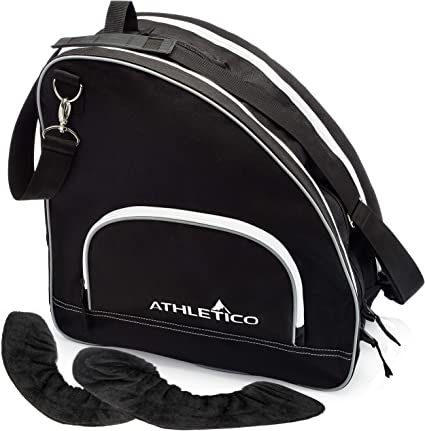
Athletico Skate Bag and Blade Covers – $35-$40
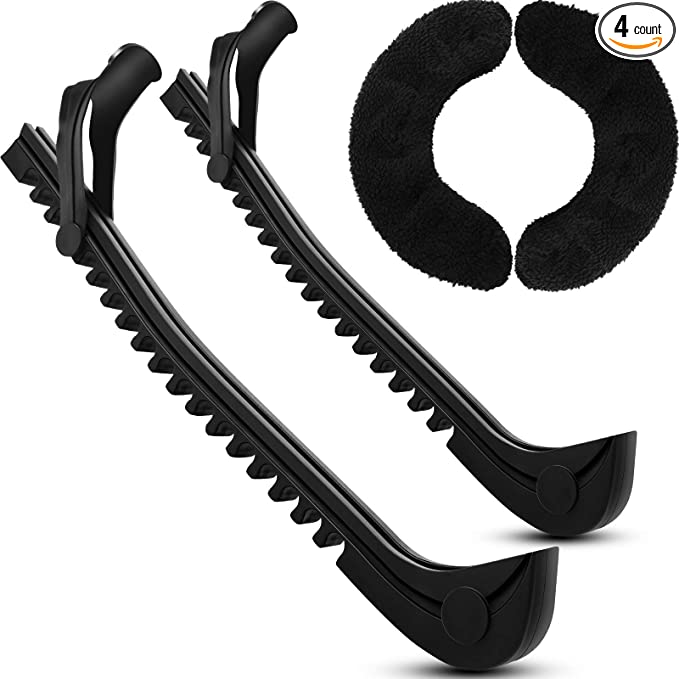
Sport Blade Covers – $18
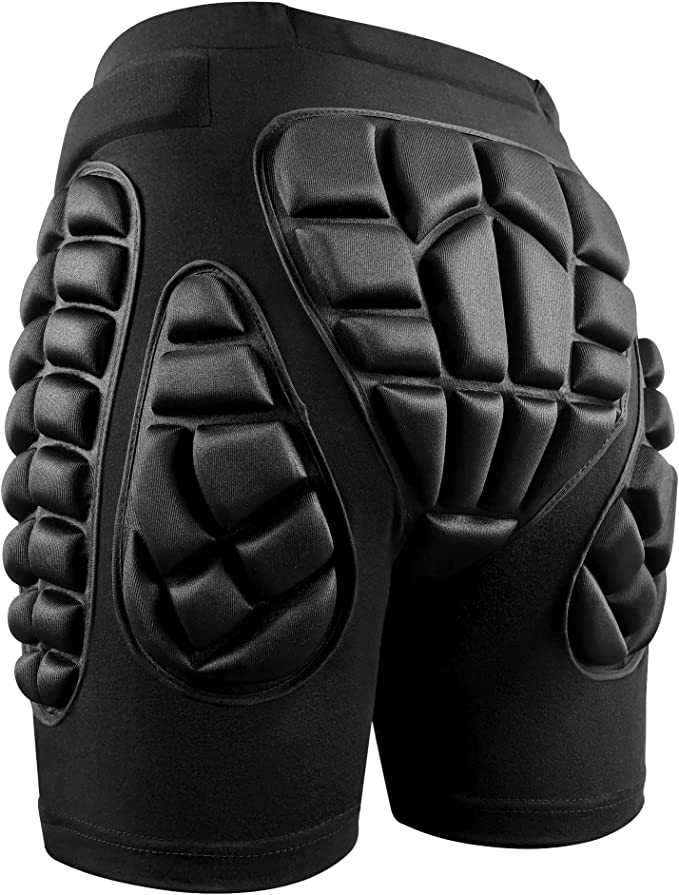
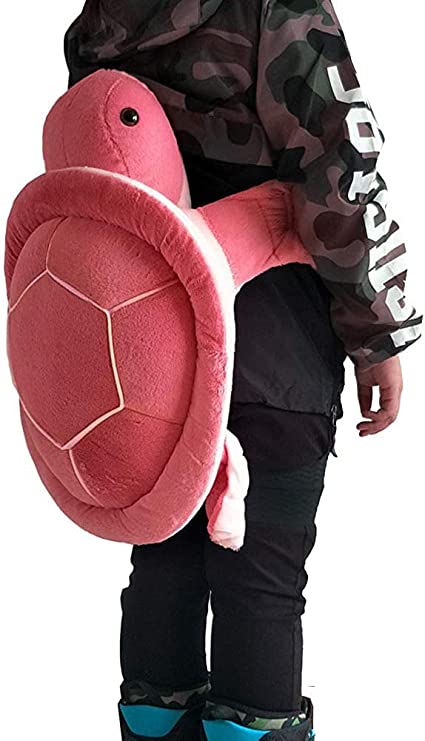
Elegeet Protective Turtle Gear – $30-$50
Keywords:
- wild ice skating Colorado
- Colorado frozen lakes
- natural ice skating
- backcountry ice skating
- Colorado winter adventures
- best lakes to ice skate in Colorado
- Colorado black ice
- early season ice skating
- safe wild ice skating tips
- Colorado alpine lake skating




Leave a comment