
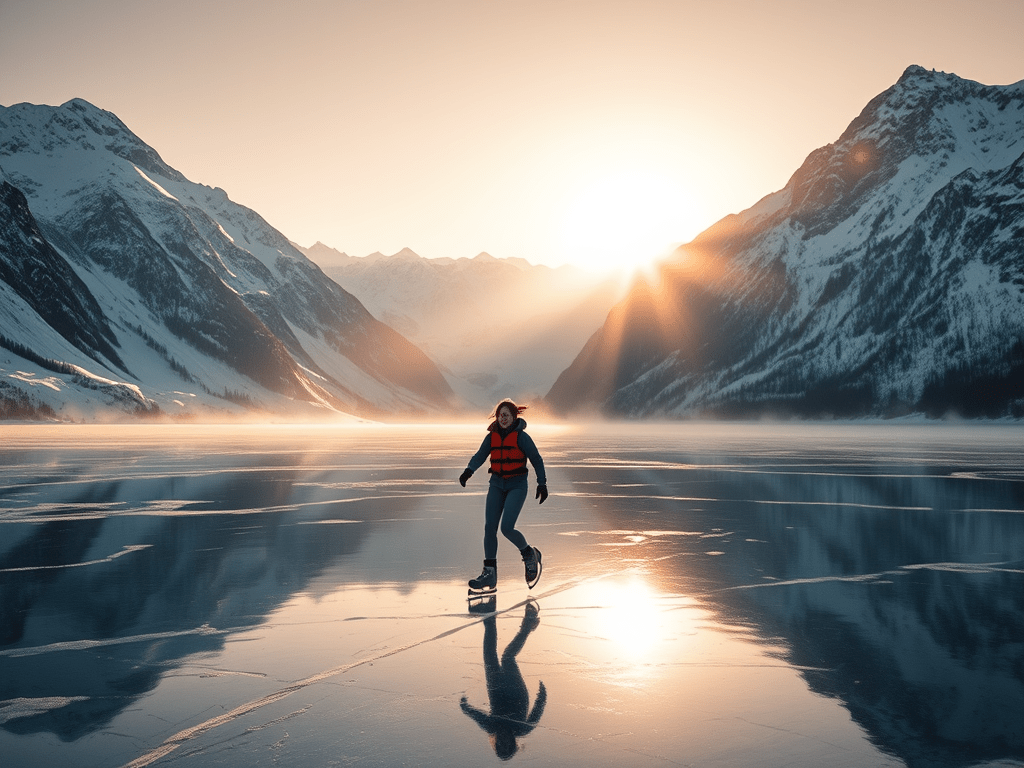
Skating on a frozen lake is one of the most magical winter adventures you can experience—gliding over glassy alpine water with snowy peaks reflecting all around you. But wild ice skating is also an extreme sport with real risks, especially in remote backpacking destinations where rescue access is limited. If you’re planning a winter hike to an alpine lake or simply want to try natural ice skating safely, these essential rules will help you test ice thickness, identify hazards, and stay prepared.
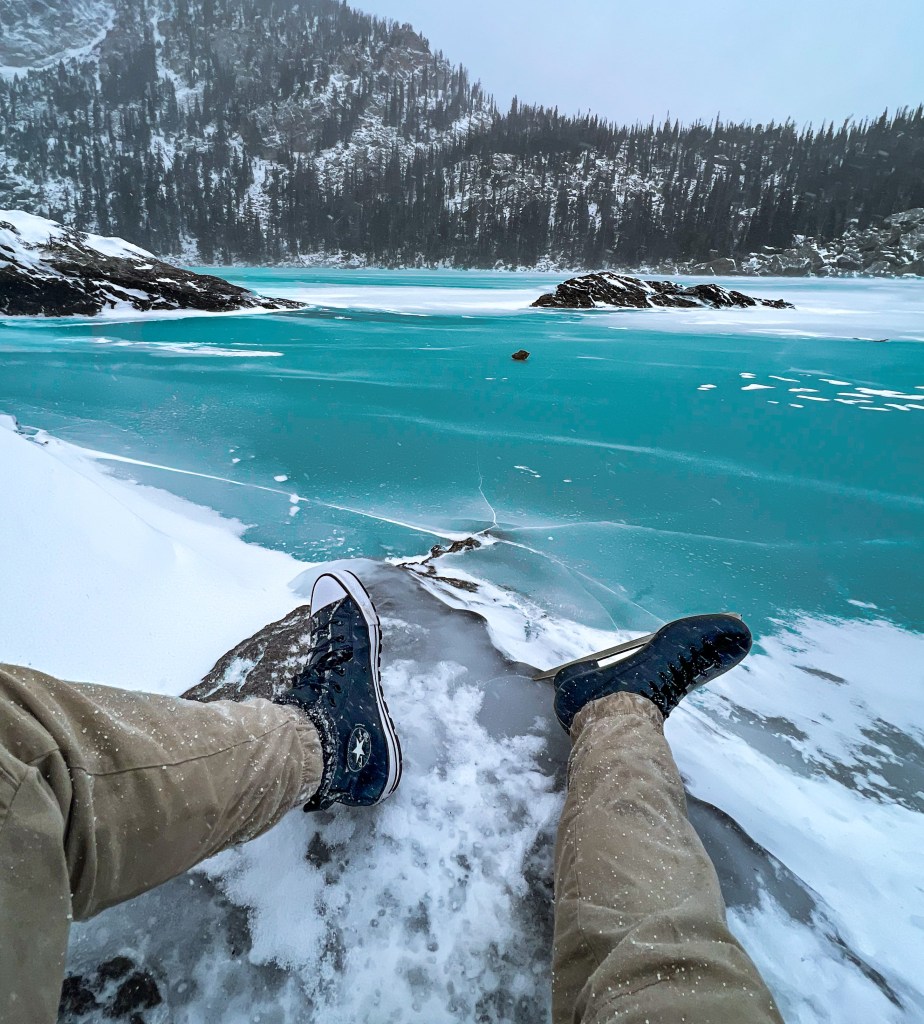
Table of Contents
Wear a Life Vest (While Skating)
Wearing a life vest while ice skating might feel unconventional, but it’s as important as a helmet on the slopes or a seatbelt in a car. If the ice breaks beneath you, a vest keeps your head above water and buys you precious seconds in freezing temperatures. That extra buoyancy can make all the difference while getting your bearings to plan your escape.
When choosing a vest:
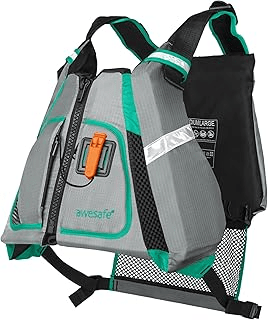
- Opt for a low-profile life vest that won’t restrict mobility (SUP and kayak vests work great).
- Look for pockets to store essentials like ice picks, your phone, or keys.
- Avoid bulky vests that interfere with arm swings or skating motion.
This is the exact type of life vest I use, and it is perfect because it does not restrict movement while skating.

Test the Ice Before You Step On It
Never assume ice is safe even if you see others skating or you visited the same spot last week. Conditions change daily with temperature, snow cover, wind, and water movement. Always test the ice yourself using one of the following methods.
1. Throw a Rock
It may seem primitive, but it’s extremely effective. Find a softball-sized rock and toss it straight up into the air, letting it drop onto the ice:
- Safe Ice: The rock bounces, skitters, or leaves only a small dent. You may hear the distinctive “twang” sound of solid black ice.
- Unsafe Ice: Cracks radiate outward, the rock punches through, or water appears. If your rock falls through, immediately move to another area (and grab a new rock before testing again).
2. Drill a Hole
For the most accurate reading, drilling is the gold standard. Use a hand auger or ice screw to open a small core.
- Minimum Thickness for Skating: 4 inches (10 cm) of clear ice
More thickness is needed for groups or gear.
Testing multiple spots as you venture farther from shore is key as ice doesn’t freeze evenly.
Learn to Read Natural Ice Conditions
Nature creates a mosaic of ice types, and understanding these patterns can help you identify dangerous areas before you step onto them.
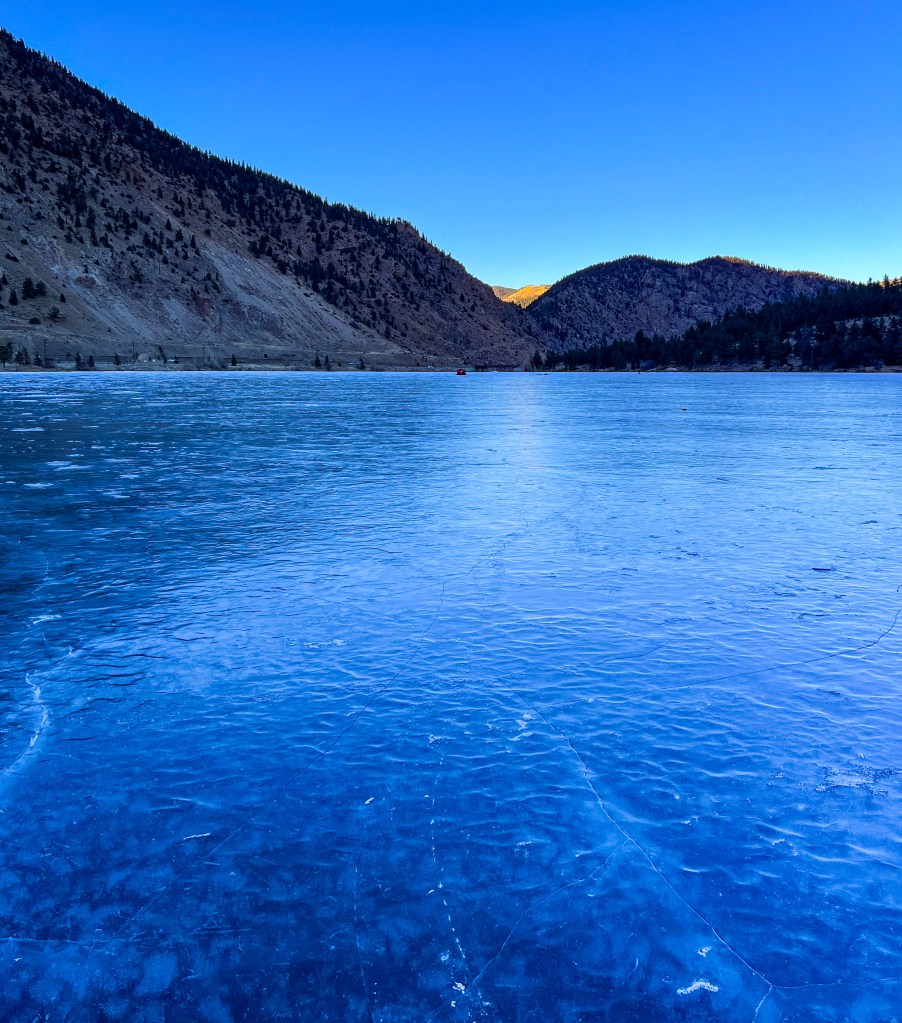
1. Clear or Black Ice
- The strongest and safest ice.
- Forms under stable, cold conditions.
- Ultra smooth texture that is ideal for skating.
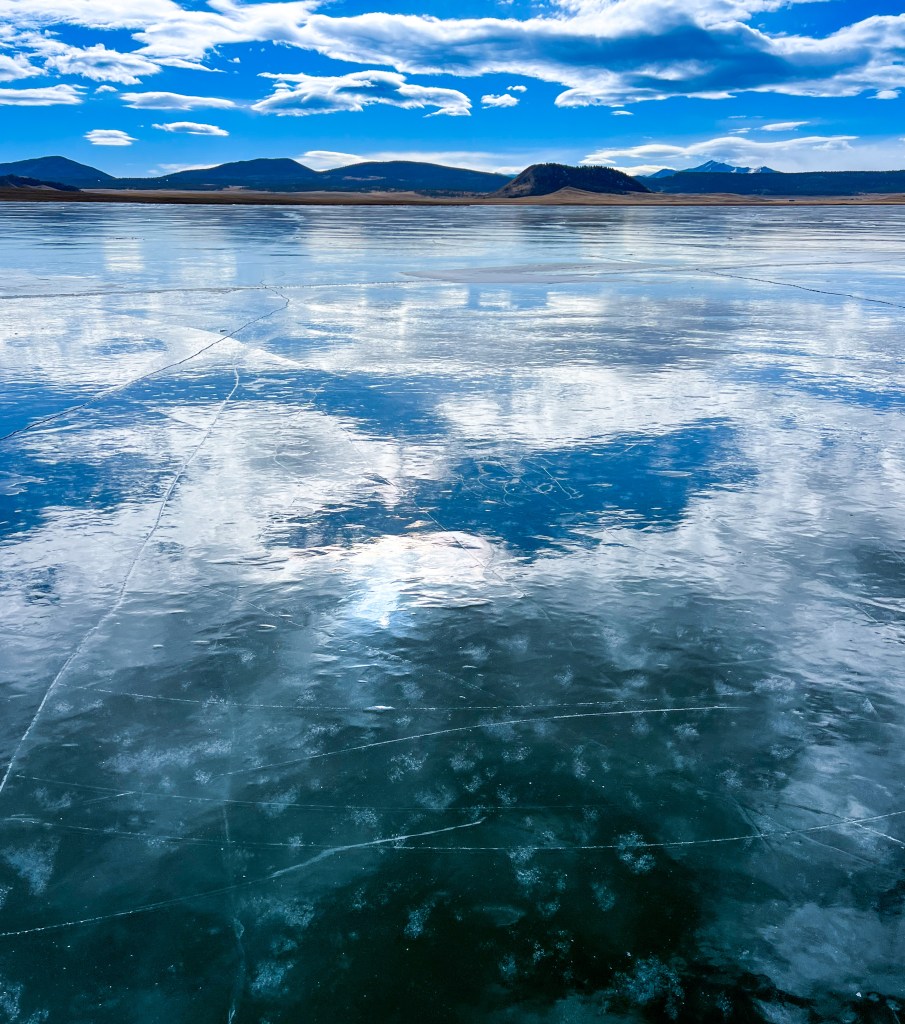
2. White Ice
- Caused by refreezing after surface melt or snow compaction.
- Usually safe but not as strong as clear ice.
- Always test white patches with a rock or drill, as they may hide weak layers.
- Sometimes these layers overlap clear/black ice.
3. Surface Melt & Runoff Areas
- Thin, slushy, or wet sections often found near shorelines.
- Usually indicate temperature fluctuations and poor structural integrity.
- Step over visible rifts or cracks and retest ice on the far side.
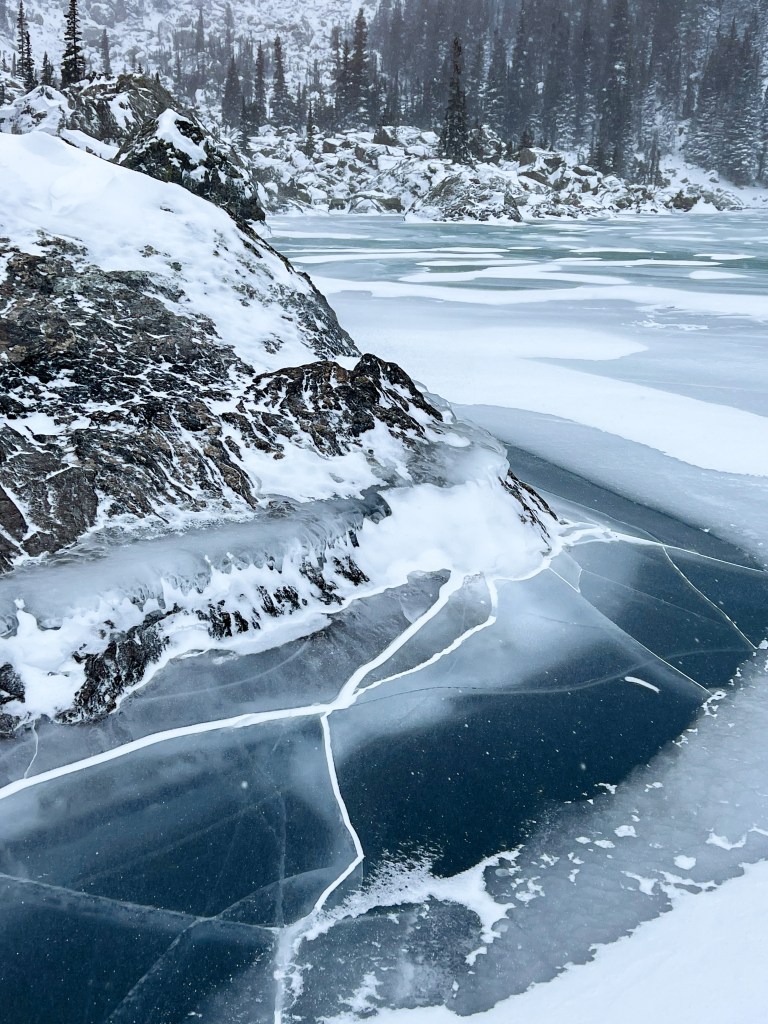
Ice conditions can change by the hour, especially in sunny or windy weather, so stay observant as you explore.
Bring Ice Picks and Extra Clothes
Ice picks are your final line of defense. In the rare event you fall through:
- Your life vest will float you.
- Use your picks to anchor into the ice and pull yourself forward.
- Flutter kick your legs and slide onto the surface like a penguin until you reach solid ice.
This set of ice picks typically costs less than $10 and can save your life or someone else’s.
Always pack a full set of warm, dry clothes to change into. Even if you don’t fall in, the cold can sneak up on you during long alpine trips. Many skaters end up wearing their backup layers anyway.
Never Skate Alone (But It Happens So Be Prepared)
Most outdoor adventures encourage the buddy system, and natural ice skating is no different. A partner can call for help, assist in a rescue, or help you warm up after exposure.
That said, wild ice skating isn’t mainstream so finding a partner isn’t always easy. If you choose to skate solo:
- Make sure you have all other safety gear.
- Notify someone of your location and return time.
- Stick to ice you’ve thoroughly tested.
- Stay within sight of a shoreline exit.
One perk of this sport is that skaters often form friendly, informal groups on the lake. Don’t hesitate to connect with fellow adventurer as many people are just as eager to share the experience.
Final Thoughts: Enjoy Natural Ice Skating Safely
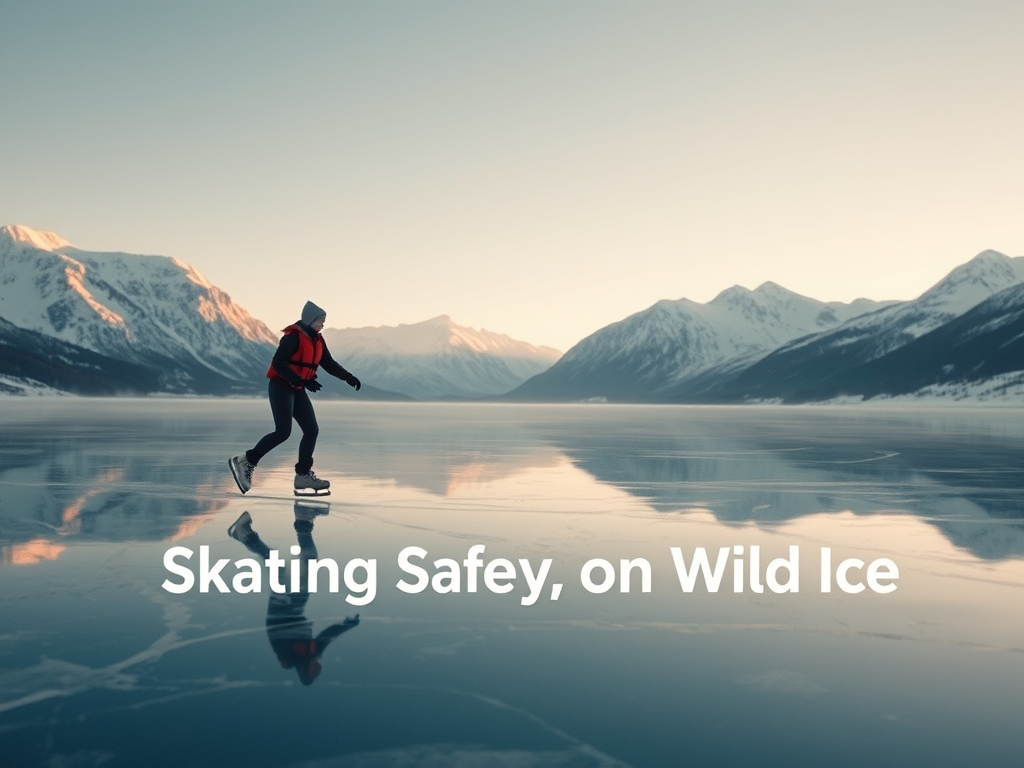
Skating on alpine lakes is a bucket-list experience for winter travelers and outdoor enthusiasts, offering scenery and solitude you won’t find at a rink. By understanding ice conditions, bringing proper safety gear, and testing the ice yourself, you’ll reduce risks and maximize the magic of skating in the wild.

Keywords:
- natural ice skating
- lake ice safety
- how to test ice thickness
- wild ice skating tips
- frozen lake conditions
- alpine lake adventures
- winter travel safety
- backcountry ice skating
- black ice skating
- outdoor winter activities





Leave a comment